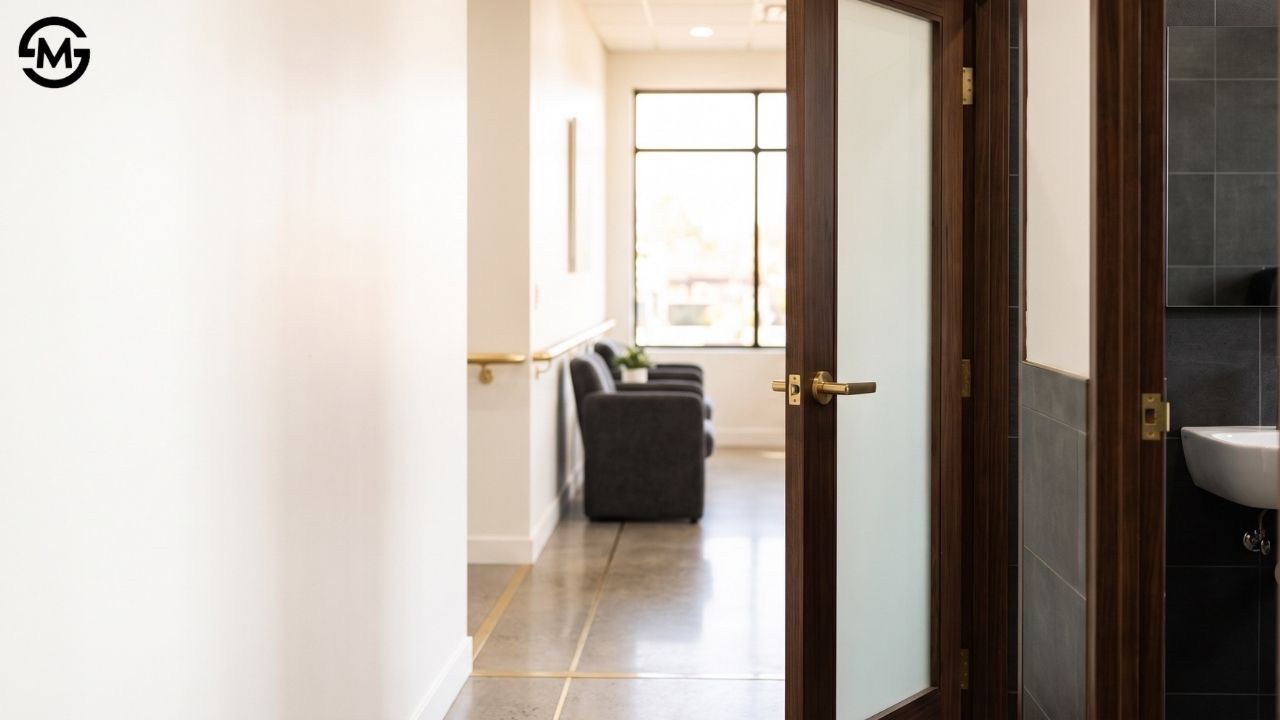
How Your Dental Practice Restroom Affects Patient Trust
Aug 12, 2026Every doctor understands the importance of a clean reception area, a polished consultation room, and a meticulous operatory. We invest in technology, interiors, team training, and clinical systems because these are the visible elements of the patient experience.
But there is another room that can influence how a patient feels about your practice.
It is the patient restroom.
At first, that may sound insignificant. It is not. The patient restroom is one of the few spaces in a dental practice where a patient is completely alone.
There is no team member to welcome them, no doctor to explain the care, and no carefully choreographed interaction to guide their impression. There is only the environment and what it communicates.
A restroom that is disorganized, poorly maintained, dim, or missing basic comforts can create a quiet but important disconnect.
Even if a patient says nothing, the question can arise: If this detail has been overlooked, what else might be overlooked?
In a profession built on trust, that is a question no practice should invite.
The patient restroom is a trust audit
Patients form their opinion of a practice through hundreds of small signals. Some are obvious. They notice whether the front desk is organized, whether the team is kind, and whether the clinical spaces appear clean and professional.
Other signals are more subtle. They reveal whether excellence is embedded in the culture or simply displayed in the spaces where the practice expects to be evaluated.
The restroom is one of those subtle signals. Patients understand that the reception area is designed to make a positive first impression. They expect an operatory to look clean. A private space carries a different kind of meaning because it feels less staged. It can feel like an honest reflection of the practice's day-to-day standards.
For that reason, the goal should never be merely acceptable. The room should be meticulous, functional, comfortable, and intentional.
What a patient-ready restroom should communicate
A high-standard restroom does not need expensive finishes or hotel-level extravagance. It does need to convey that the practice has thought through the patient experience all the way to the details many others ignore.
Cleanliness without question
The sink, mirror, floor, toilet, door hardware, and wastebasket should be clean at every point in the day. Nothing weakens confidence faster than an overflowing trash bin, water spots on the counter, or visible clutter.
The room should never become a storage area for operational supplies, boxes, staff items, or cleaning equipment.
Cleanliness communicates discipline. In healthcare, it also supports the feeling that the practice takes safety and standards seriously.
Freshness and comfort
The room should feel fresh, well lit, and actively maintained.
The scent should be subtle rather than overwhelming. Good soap, lotion, tissues, and clean hand-drying options make a difference because they tell patients that their comfort has been considered.
These details may appear small, but they carry a meaningful message: you are not an interruption here. You are being cared for.
A few thoughtful essentials
Consider the patient who arrives from work, has traveled, or simply wants to freshen up before an appointment. When appropriate, provide simple items such as individually wrapped disposable toothbrushes, floss, and mouthwash.
The purpose is not to create a luxury amenity bar. It is to remove friction and anticipate needs. That is what excellent hospitality looks like in a clinical environment.
Privacy, accessibility, and ease
The location of the restroom should be clearly indicated. The path should be easy to navigate. Lighting should be sufficient, privacy should be protected, and the space should be accessible and dignified for every patient.
Respect becomes visible when no patient has to struggle to find, enter, or use a basic facility in your office.
The standard begins with leadership
Most dental teams understand that a patient restroom should be clean. The more important question is this: who owns the standard?
If no one owns it, no one truly owns it. During a busy day, a towel runs out, supplies are depleted, a wastebasket fills, and a temporary item becomes permanent. The room slowly shifts from a patient space to a neglected afterthought.
That is why I believe leadership matters more than a checklist. When I see that a patient restroom is not in the condition I expect, I address it. There is no task in a practice beneath the person who wants the practice to be exceptional.
This is not about a doctor cleaning a countertop. It is about demonstrating that standards are not selective. If the doctor notices, cares, and acts, the team understands that attention to detail is part of the culture.
Create a repeatable system, not a vague expectation
Good intentions do not maintain a patient restroom. A simple operating system does.
Start by making the restroom part of the daily practice rhythm.
Before the first patient arrives, inspect the room for cleanliness, scent, supplies, lighting, and overall presentation. Every item should have a defined place, and nothing should remain there unless it serves the patient.
During the day, assign routine checks, especially during high-traffic periods. The team member responsible can rotate, but the expectation should remain fixed: the room is restored as soon as it falls below standard.
At the end of the day, reset the space so the next morning begins with readiness rather than recovery. A short close-of-day routine prevents small oversights from becoming part of the environment.
The five-question walkthrough
Before you consider the restroom ready for patients, walk in with fresh eyes and ask:
•Is every surface visibly clean?
•Does the room smell clean and fresh?
•Are the essential supplies full, orderly, and easy to use?
•Is the room free of staff storage and operational clutter?
•Would I be proud for my most discerning patient to enter it right now?
If the answer to one of these questions is no, the room is not ready.
Excellence is visible everywhere
Patients may not remember the exact soap you provide or the color of the towels. They will remember how the practice made them feel.
A meticulous patient restroom tells people that your practice is attentive, prepared, respectful, and consistent. It reinforces the clinical trust you have worked to earn. It supports the investments you have made in technology, training, and design.
Most importantly, it demonstrates that your standards do not disappear when a patient steps away from the main stage.
Excellence is not confined to the operatory. It is a culture that patients can see in every room, at every moment, especially when they are alone.
Review your patient restroom today. It may be the most honest reflection of the standards your practice delivers everywhere else.