The $2 Item That Transformed My Dental Practice — And Why No One Talks About It
Jul 08, 2026I've been practicing dentistry for over three decades. I've invested in the best technology, trained with the best clinicians, and built a team I'm genuinely proud of. But for years, I was missing something so obvious, so simple, that I'm almost embarrassed to admit how long it took me to see it.
The dental office is one of the most emotionally charged environments in all of healthcare. Patients don't just bring their teeth through our doors. They bring their fear, their shame, their memories of past pain, and years of anxiety they've been quietly carrying. Study after study confirms that dental fear affects somewhere between 36% and 50% of the population to some degree, with roughly 12% experiencing fear severe enough to avoid care altogether. We know this. We talk about it at conferences. And then we walk back into our operatories and do almost nothing about it.
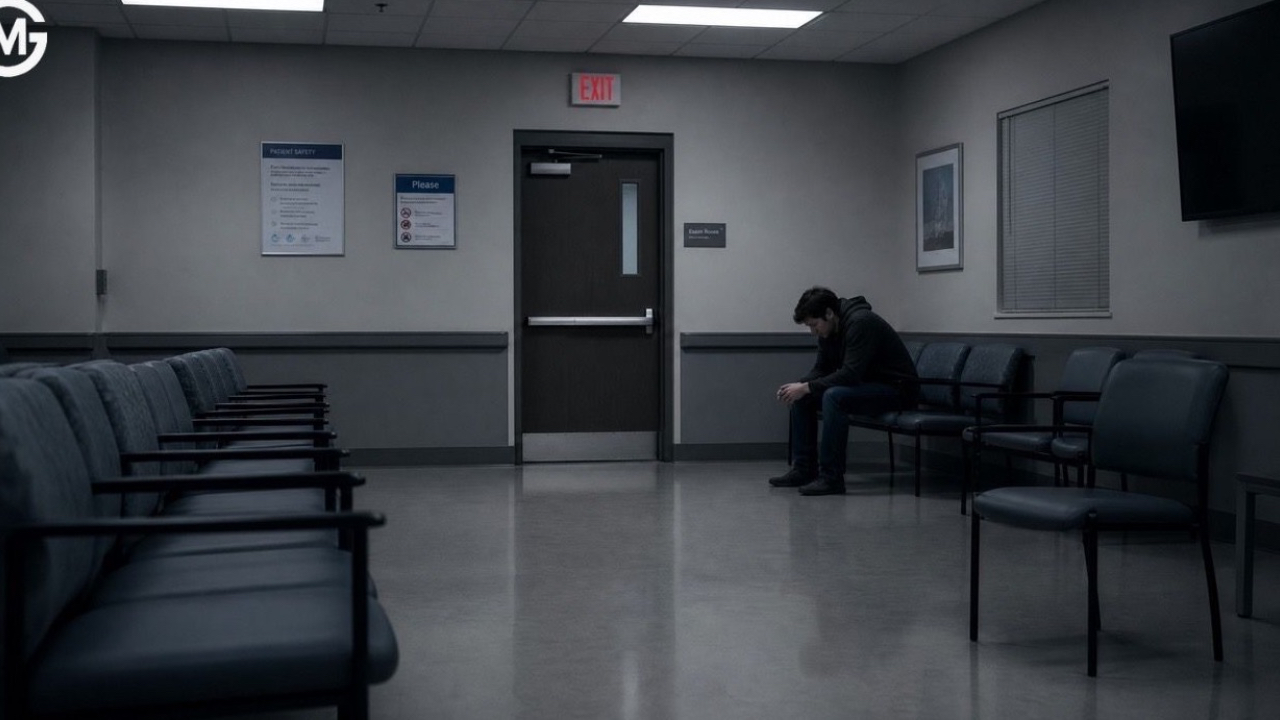
A tense, clinical waiting room with a single anxious patient sitting alone. Establishes the core problem: the emotional isolation patients experience before they even see a practitioner.
The Mistake Most Clinicians Are Making Every Day
For most of my career, I operated the way I was trained: arrive, assess, treat. The emotional state of the patient was something to be managed efficiently — acknowledged briefly, then set aside so we could get to the real work. I thought I was being professional. What I was actually doing was leaving patients stranded in their fear, and then wondering why procedures felt harder than they should, why certain patients never came back, and why my team ended the day emotionally drained.
The turning point came when I started paying close attention to what was actually happening in those first few minutes of an appointment. What I found changed everything. Patients who arrived visibly anxious and were given genuine space to be heard — not rushed, not redirected, simply acknowledged — became entirely different people in the chair. Their bodies relaxed. Their grip on the armrests loosened. The procedures that followed were smoother, faster, and less stressful for everyone in the room.
I began to understand that the emotional work is the clinical work. You cannot separate them.
What I Changed — And What It Cost
I made two changes that, on the surface, seem almost absurdly small. Together, they produced results I still find remarkable.
The first change was time. I restructured my initial appointments so that roughly 50% of that first visit is pure conversation — no instruments, no charting pressure, no rushing toward the procedure. I sit with the patient. I ask about their history, their fears, their past experiences. I listen without an agenda. I learned this approach not in dental school, but from a framework I first encountered long before my residency: Stephen Covey's principle of seeking first to understand before seeking to be understood. Applied to a clinical setting, it is transformative.
The results were immediate. Patients who had avoided dental care for years — sometimes decades — began completing full treatment plans. The anxiety that had made them difficult to treat simply dissolved when they felt genuinely heard. Our case acceptance improved. Our cancellation rate dropped. And the quality of the clinical work itself improved, because a relaxed patient is physiologically easier to treat than a terrified one.
The second change cost less than two dollars. I mandated that a box of tissues be placed within arm's reach in every single room in our office — the reception area, the financial consultation room, every operatory. Not tucked away in a drawer. Visible, accessible, and ready.
This sounds trivial. It is not. When a patient begins to show signs of emotional distress — and in my practice, between 10% and 15% of patients experience a genuine emotional release on any given day — the worst thing a clinician can do is leave the room to find tissues. That moment of leaving breaks the connection at precisely the moment the patient needs it most. Having tissues immediately available means I can respond instantly: offer one, place a gentle hand on the patient's arm, and simply say, "It's okay. Take your time." That small act of preparedness communicates something profound: I anticipated that you might need this. I was ready for you.
Why Crying in My Office Is a Good Sign
I want to address something that might seem counterintuitive. When a patient cries in my office, I don't view it as a problem. I view it as a breakthrough.
Most of the emotional releases we see are not caused by pain. They are caused by relief — the relief of finally being in an environment where they feel safe enough to let go of fear they've been holding for years. When a patient apologizes for crying, I tell them directly: "Please don't apologize. This is exactly what this space is for." Giving explicit permission to feel is one of the most powerful clinical tools I have ever used, and it costs nothing.
The physiology supports this. When a patient is in a state of acute anxiety, their sympathetic nervous system is activated. Their muscles are tense, their pain threshold is lower, and their ability to cooperate with treatment is compromised. When they are allowed to release that emotional tension — through conversation, through tears, through simply being heard — their parasympathetic system takes over. They become physiologically calmer, more comfortable, and genuinely easier to treat. The emotional work and the clinical work are not in competition. They are the same work.
The Principle Behind All of It: Be Prepared
The deeper philosophy connecting both of these changes is one I first learned as an Eagle Scout, long before I ever treated a patient: be prepared. In a clinical context, this means anticipating the emotional needs of your patients before they arise, so that when a moment of vulnerability occurs, you are already equipped to meet it. You are not scrambling for tissues. You are not caught off guard by tears. You have already created the conditions for safety, and your patient can feel that.
This principle of anticipatory care extends beyond tissues. It means having a glass of water ready. It means having lip balm available after a long procedure. It means ensuring that every person on your team understands that their first job — before any clinical task — is to make the patient feel genuinely safe. When the entire environment communicates preparedness and care, patients feel it before a single word is spoken.
Three decades in, these are the lessons I return to most often. Not the advanced surgical techniques, not the latest implant systems — though those matter enormously. It is the tissue box. It is the conversation. It is the willingness to sit with a patient in their fear and say, without words: I was ready for you. You are safe here.
That is what transforms a dental practice. And it costs almost nothing.
Want Dr. Sonick to transform your team into patient experience champions?
Discover the proven "Showtime" methodology that has helped practices increase case acceptance by 25%, boost patient retention by 15%, and create teams that patients rave about. Dr. Sonick's exclusive training program teaches your entire team how to combine clinical excellence with hospitality-driven care that drives measurable results.
Ready to create your own culture of caring? Learn more: https://michaelsonick.com/course