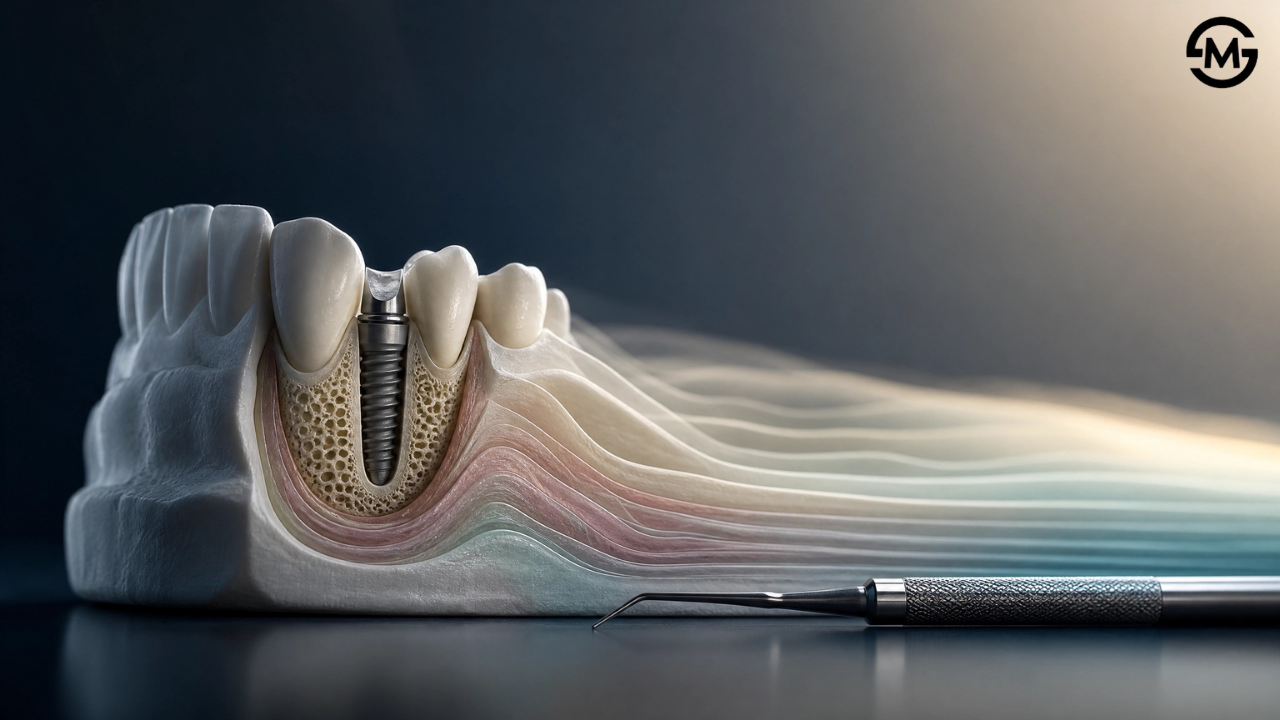
The “Slowest” Implant Dentist? The Real Secret to Implant Longevity
Aug 31, 2026
If you ask me what separates a successful implant from an unsuccessful one, I will not begin with a survival-rate percentage.
I will ask a different question: What will this implant look like, feel like, and require 10, 20, or 40 years from now?
I have practiced in the same office for more than 42 years. That continuity has given me a long view of implant dentistry. I see the patients who return years later with healthy, stable tissue. I also see the patients who return with inflammation, bone loss, and complications that began with decisions made before an implant was ever placed.
This is why I often say I may be the slowest implant dentist in the country. I do not mean that I am indecisive. I mean that I am unwilling to rush past the biology that determines whether an implant can remain healthy for a lifetime.
Implant survival is not the whole story
Dental implant survival rates are a useful metric, but they are not enough. An implant can survive while the surrounding tissues are inflamed, its bone support is deteriorating, or the esthetic result is slipping away.
A meaningful definition of implant success is broader. The implant should be functionally stable, free from persistent inflammation, supported by healthy hard and soft tissue, esthetically acceptable, and maintainable for the patient.
That standard matters because peri-implant disease is common. A 2020 consensus review found weighted mean patient-level prevalence estimates of about 43% for peri-implant mucositis and 22% for peri-implantitis, while emphasizing that prevalence estimates vary by the case definitions used and populations studied.
In other words, having an implant is not the same thing as having lifelong implant health.
The first rule: Treat infection before placing titanium
Many implant complications are not created at the moment of placement. They are set in motion by disease that was never controlled.
When a patient has periodontal disease, that disease has to be treated first. It is not enough to repair the visible tooth or replace the tooth that is missing. The entire mouth must be evaluated as a biologic environment.
A systematic review and meta-analysis concluded that patients with a history of periodontitis have a significantly greater risk of developing peri-implantitis than periodontally healthy patients, although the authors also noted limitations in the available evidence.
That is why I begin by getting periodontal infection under control. The goal is not simply to make the site ready for surgery. The goal is to reduce the risk that the implant will be placed into a patient whose disease process is still active.
The second rule: Build the foundation before you build the restoration
Adequate bone around the implant is not optional architecture. It is the foundation for stable hard and soft tissue.
In many cases, the most responsible choice is to graft first and place the implant later. The extra stage may feel slower, but it can create a more favorable bony housing and better conditions for long-term tissue stability.
Clinical decisions must always be individualized, but an ITI consensus statement recommends a buccal bone wall thicker than 1.5 mm at implant placement to promote long-term peri-implant health. For that reason, I plan for an adequate bone envelope rather than merely finding enough bone to place an implant today.
The difference is not cosmetic. It is a difference in philosophy.
The third rule: The delivery appointment begins maintenance
The restoration is not the finish line.
Long-term implant health depends on plaque control and an individualized maintenance program. For my patients, this means an explicit commitment to periodontal and implant maintenance—often at three- to six-month intervals based on the patient’s risk profile.
This conversation must happen before treatment starts. Patients need to understand that implant therapy is not a one-time transaction. It is a lifelong partnership between clinician and patient.
A more useful question for every implant case
Before placing an implant, I encourage clinicians to ask:
If I see this patient again in 20 years, will I be proud of the biologic result—not just the radiograph from today?
That question leads to better sequencing. It leads to better patient conversations. And, when needed, it gives us permission to slow down.
Being “slow” is not a flaw when the objective is longevity. It is often the discipline required to protect it.
Be the gift.