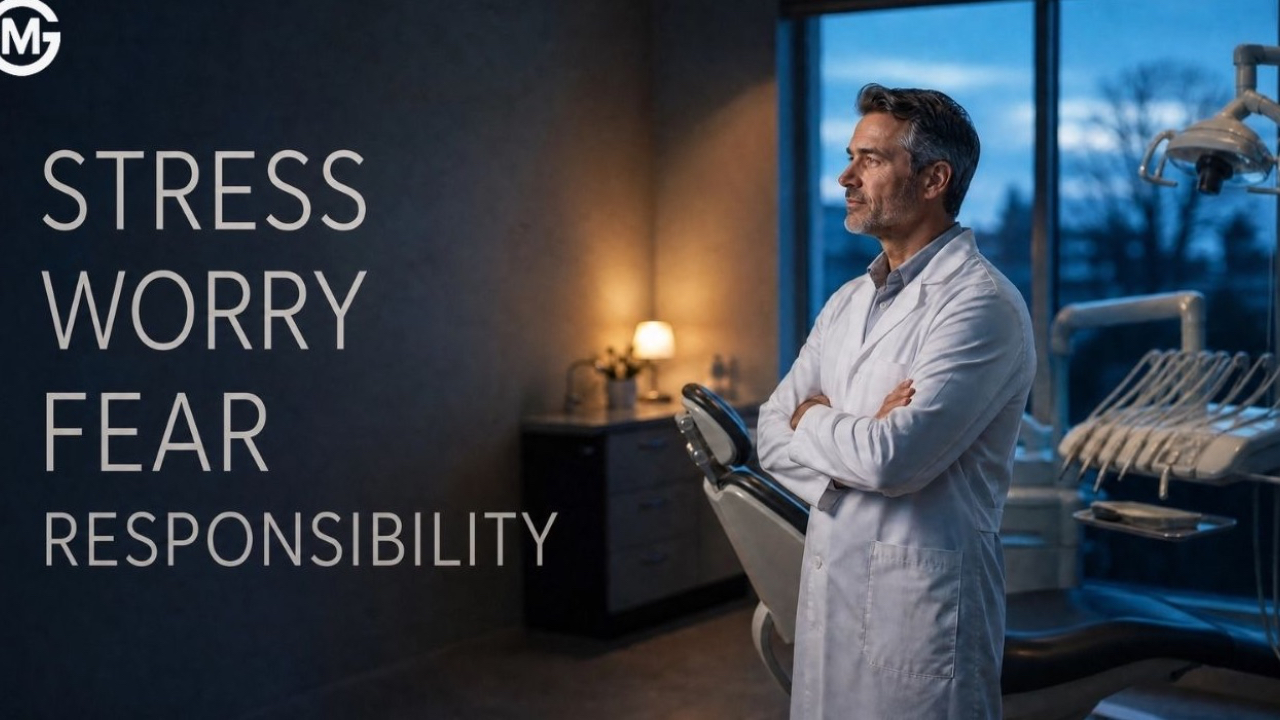
The Weight of the White Coat: Why Clinical Perfection Isn't Enough
Jul 20, 2026If you are like most of the dentists I know, you have probably had a night like this.
It is 3:00 AM. The house is quiet, but your mind is racing. You are staring at the ceiling, replaying a conversation you had earlier that day. A patient, someone you know desperately needs care, walked away from the treatment plan you presented.
You explained the clinical necessity. You showed them the radiographs. You knew, with absolute certainty, that you could help them.
Yet, they said no.
In the stillness of the night, the doubt creeps in. You wonder what you did wrong.
You take it personally. You ask yourself if you need to invest in another piece of technology, take another continuing education course, or refine your technique just a little bit more.
I know that feeling intimately because I lived it for years.
We are trained to believe that the path to a thriving, fulfilling practice is paved with clinical perfection. We spend our lives honing our skills, mastering our craft, and striving for flawless execution. We are taught that if our work is impeccable, the rest will naturally follow. Patients will accept treatment, the practice will flourish, and we will feel the deep satisfaction of changing lives.
But the reality of our profession is often much heavier. The weight of the white coat isn't just about the physical toll of the operatory; it is the emotional burden of leadership. It is the pressure of managing a team, the anxiety of overhead costs, and the quiet fear that despite our best efforts, we might still fail the people sitting in our chairs.
For a long time, I was trapped in that cycle. I assumed that when a patient declined treatment, it was a reflection of my clinical inadequacy. I projected my own biases onto their decisions, assuming I knew what they were thinking or what they could afford. I was so focused on being a perfect clinician that I forgot how to be a perfect listener.
The turning point for me wasn't a new surgical technique or a revolutionary piece of equipment. It was a painful but necessary realization: the real barrier to the practice I dreamed of wasn't in my hands. It was in my head.
I had to learn that our patients don't evaluate us on our margins or our suturing techniques. They evaluate us on how we make them feel. They are looking for someone they can trust, someone who understands their fears, respects their time, and genuinely cares about their well-being.
When I shifted my focus from simply presenting clinical facts to fostering true connection, everything changed. I stopped trying to "sell" dentistry and started having honest, vulnerable conversations. I learned to ask better questions and, more importantly, to listen to the answers without judgment.
The results were profound. Not only did case acceptance naturally improve, but the heavy, isolating stress began to lift. The 3:00 AM wake-ups became rare. I stopped dreading the difficult conversations and started looking forward to the opportunity to truly connect with the people in my care.
If you are feeling the weight of your practice right now, I want you to know that you are not alone. Your dedication to your craft is admirable, but it is only half of the equation.
The dream you have for your practice, a place of mutual respect where patients enthusiastically say "yes" to the care they need and where you find genuine joy in your work, is entirely possible. But it requires stepping out from behind the safety of clinical perfection and embracing the messy, beautiful reality of human connection.
You already have the skills in your hands. It is time to trust the empathy in your heart.