What Patients Really Judge You On — And Why It Has Nothing to Do with Your Clinical Skills
Jul 01, 2026I have been practicing and teaching for 40 years. And the most important insight I have ever shared with my students has nothing to do with technique, technology, or treatment planning.
It has to do with a dirty carpet.
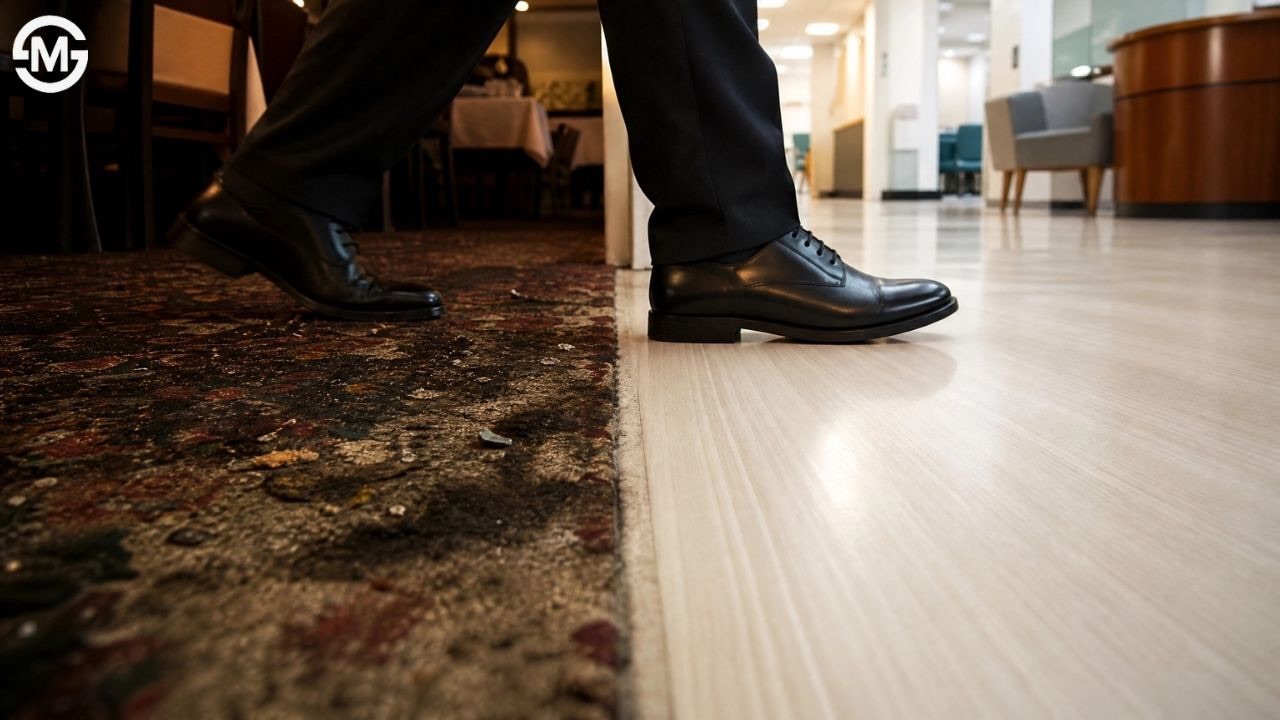
Years ago, I walked into a restaurant in Chicago with my son. The moment I stepped through the door, I wanted to leave. He looked at me, puzzled, and asked why. I pointed down. "Didn't you see the carpet?"
The carpet was filthy. Stained, worn, and neglected. And in that instant — before I had tasted a single dish, before I had spoken to a single server — I had made a complete judgment about the quality of that kitchen, the standards of that chef, and the safety of that food. The Michelin stars on the wall meant nothing. The carpet had already told me everything I needed to know.
Your patients do the exact same thing to your practice. Every single day.
The Invisible Exam Your Practice Is Already Taking
Here is the difficult truth that most practitioners never fully reckon with: patients cannot evaluate your clinical skills. They do not have the training. They cannot look at your work and know whether a margin is perfect, a diagnosis is precise, or a treatment plan is optimal. That knowledge lives with you, not with them.
What they can evaluate — and what they evaluate constantly, often without conscious awareness — is everything else. The state of your waiting room. The cleanliness of your windows. The condition of your landscaping. The tone of voice used by the person who answers your phone. The smell of your reception area. The freshness of the flowers on the front desk.
Research consistently shows that 80% to 90% of patients will visit a practice's website before their first appointment. But the digital impression is only one layer. Long before a patient ever sits in your chair, they have already assembled a complete picture of who you are, how much you care, and whether they can trust you — built entirely from these environmental and interpersonal signals. I call these signals "touchpoints," and most practitioners are completely blind to them.
The tragedy is not that these touchpoints exist. The tragedy is that so many highly skilled, deeply caring practitioners are unknowingly failing them.
The 4.5-Minute Anti-Sales Technique
Let me give you a concrete example of how this plays out.
Imagine a prospective new patient — let us call her Sarah — who has just worked up the courage to call your office for the first time. She has been anxious about dental care for years. She has finally decided to try again. She dials your number.
She is placed on hold. And for four and a half minutes, she listens to a recorded infomercial promoting your services, your technology, and your awards. By the time someone picks up, she has already emotionally checked out. She books the appointment, but her trust has been eroded before a single word has been exchanged between a human being and another human being.
This is one of the most common anti-sales techniques in healthcare, and most practitioners have never once questioned it. The hold music that is supposed to sell your practice is, in reality, communicating something far more damaging: we do not value your time, and we are more interested in promoting ourselves than in serving you.
The phone is a touchpoint. And it is one that most practices fail.
What Patients Are Actually Asking
Every patient who walks through your door — especially a new patient — is asking a version of the same fundamental question. They are not asking, "Is this doctor technically proficient?" They are asking: "Am I safe here? Does this person care about me? Did I make the right choice?"
Those questions are answered before the clinical encounter begins. They are answered by the person who greets them at the door. By whether that person knows their name. By whether the waiting room feels like a place of calm and care, or a place of indifference and neglect. By whether, if the doctor is running late, someone comes out to acknowledge it, apologize sincerely, and offer a small gesture of hospitality.
These are not soft, peripheral concerns. They are the primary determinants of whether a new patient becomes a loyal, long-term patient — or whether they leave and never return.
I have seen practices with extraordinary clinical reputations struggle to retain patients because the experience surrounding the clinical encounter communicated carelessness. And I have seen practices with good — but not exceptional — clinical skills build fiercely loyal patient communities because every touchpoint communicated: you matter, you are seen, and you are in the right place.
The Lesson That Changed My Teaching
Early in my career as a teacher, I made a mistake that I am not proud of. I used to intentionally lose my audience in the morning — deliberately confuse them, overwhelm them, let them feel lost — just to prove to myself that I could win them back in the afternoon. It was an ego exercise disguised as pedagogy.
An Associate Dean called me out on it. Directly and without softening. He told me that my job was not to demonstrate my own mastery. My job was to serve my students from the first moment they sat down.
That reprimand reframed everything for me. I began every subsequent lecture with a version of the same statement: "My goal today is to be a gift to you." Not to impress. Not to perform. To serve.
The transformation in the room was immediate and unmistakable. Students who had been guarded became open. Students who had been passive became engaged. The same content, delivered with a fundamentally different intention, produced a completely different experience.
The same principle applies to every patient interaction in your practice.
Be the Gift
The most powerful shift a practitioner can make is deceptively simple: stop thinking about the patient encounter as an opportunity to demonstrate your expertise, and start thinking about it as an opportunity to serve.
This is not a soft concept. It has direct, measurable consequences for patient retention, referrals, and practice growth. When a patient feels genuinely seen, genuinely cared for, and genuinely safe — they do not leave. They send their family. They send their friends. They become advocates in a way that no marketing campaign can manufacture.
Here is what this looks like in practice. When a new patient arrives, your team greets them by name — because you have their photo in your system and someone is watching for them. When a patient is visibly anxious, you do not rush past it. You stop, acknowledge it directly, validate their past experiences, and reassure them that they made the right choice by coming to you. When you are running late, you do not let the patient sit in silence wondering if they have been forgotten. You send someone out immediately, with a sincere apology and a cup of coffee.
None of these things require new technology. None of them require a larger marketing budget. They require intention. They require the decision to treat every touchpoint — from the state of your windows to the warmth of your greeting — as a direct expression of how much you care.
After 40 years in practice and teaching, I am convinced of this: the practitioners who build the most extraordinary practices are not always the most technically gifted. They are the ones who understand that clinical excellence is the floor, not the ceiling — and that the ceiling is built from the quality of human connection they create at every single touchpoint.
Your patients are already taking the exam. The only question is whether your practice is passing it.
Want Dr. Sonick to transform your team into patient experience champions?
Discover the proven "Showtime" methodology that has helped practices increase case acceptance by 25%, boost patient retention by 15%, and create teams that patients rave about. Dr. Sonick's exclusive training program teaches your entire team how to combine clinical excellence with hospitality-driven care that drives measurable results.
Ready to create your own culture of caring? Learn more: https://michaelsonick.com/course