Why Your Waiting Room Is Silently Costing You Patients — And the Hospitality Secret That Changes Everything
Jun 03, 2026I want to share something that took me years to fully understand, and once I saw it, I could not unsee it.
For most of my career, I operated under the same assumption that nearly every dentist and physician I know operates under: if you are clinically excellent, your patients will be loyal, satisfied, and eager to refer. We invest in the best technology, the finest materials, and relentless continuing education. We pour everything into the operatory. And then we wonder why patients still leave anxious, why retention plateaus, and why the atmosphere in our offices feels tense despite our best efforts.
Here is the hard truth: clinical excellence is the entry fee. It is the minimum expectation. It is not what makes a patient feel genuinely cared for. What happens in the waiting room, in the hallway, in the parking lot — that is where loyalty is won or lost. And most of us have been completely ignoring it.
The deeper problem is structural. We ask our doctors, hygienists, and clinical staff to simultaneously perform complex, high-stakes procedures and manage the emotional comfort of anxious patients. That is an impossible dual demand. Something always suffers, and it is almost always the patient experience.
What a Michelin-Starred Restaurant Taught Me About Dentistry
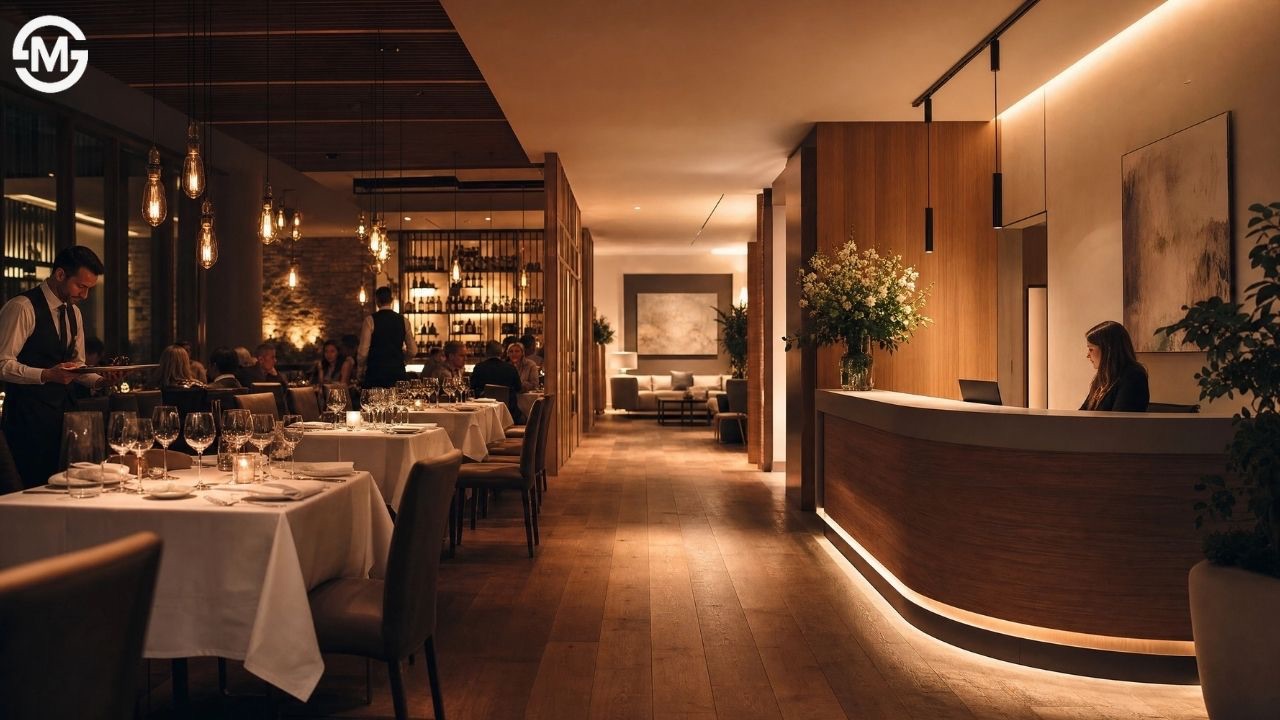
The shift in my thinking did not happen at a dental conference. It happened over dinner at Eleven Madison Park, one of the most celebrated restaurants in the world.
I was there with my wife, and at some point during the evening I mentioned to our server that I had written a book about applying hospitality principles to healthcare. What happened next stopped me in my tracks. He invited us back to the kitchen — not a quick glance through a window, but a full, unhurried tour. We were shown the meticulous organization, the immaculate surfaces, the quiet orchestration of dozens of people working in perfect harmony. Then we were seated in a private corner and served a custom egg cream, a small, personal gesture that had nothing to do with the food we had ordered.
That experience crystallized something I had been circling for years. The reason Eleven Madison Park is extraordinary is not only because the food is exceptional. It is because they have dedicated people whose entire job is to manage the guest experience. Not the chef. Not the sommelier. Specific individuals whose sole responsibility is to ensure that every detail of the environment — the temperature, the lighting, the pace, the emotional tone — is exactly right. They employ four people in this role. Four people whose job title is, essentially, Chief of Hospitality.
I drove home that night and asked myself a question that I believe every practice owner should ask: If I brought every one of my patients into my back office, my surgical suite, my laboratory — would I be proud of what they saw? That is what I now call the Kitchen Tour Standard. If the answer is anything less than an unqualified yes, there is work to be done.
The Chief of Hospitality: The Role Your Practice Is Missing
After that dinner, I went back to my practice and made a single, specific change. I identified a member of my team who had a natural gift for people — someone who genuinely loved creating warmth and comfort for others — and I gave her a new role: Chief of Hospitality. Her name is Taylor, and she has transformed our practice.
Her responsibilities are not clinical. She does not assist in surgery or manage treatment plans. Her job is entirely focused on the environment and the patient experience. Every morning before the first patient arrives, she walks the parking lot and picks up any litter. She inspects the carpets for stains. She checks the reception area to ensure the magazines are current — we keep twenty up-to-date publications, not a stack of year-old issues — and that the space feels like a lounge, not a waiting room. When a patient is kept waiting because I am running behind, Taylor does not simply apologize. She presents a curated comfort menu: sparkling water, a selection of teas, diet sodas, light snacks. The patient is not waiting. They are being hosted.
Beyond the physical environment, Taylor tracks the human moments. She knows when a patient has had a death in the family, and she sends flowers. She knows when a staff member passes their board exams or celebrates a work anniversary, and she ensures it is acknowledged. She knows when a patient mentioned last visit that they were going through a difficult time, and she follows up. These are not grand gestures. They are small, consistent acts of genuine care that accumulate into something profound: the feeling that you are known, valued, and not just a chart number.
The insight that has stayed with me most from all of this is deceptively simple. Making people feel good is often not about doing something extraordinary. Most of the time, a great experience is simply the absence of feeling bad. No stains on the carpet. No outdated magazines. No sitting in silence while wondering if anyone remembers you are there. Remove the friction, and warmth fills the space naturally.
How to Bring This Into Your Practice Starting Today
You do not need to hire someone new to begin implementing this. The first step is to look at your practice through the lens of a first-time guest, not a clinician.
Walk through your front door as if you have never been there before. Sit in your waiting room for ten minutes. Notice what you see, hear, and feel. Is the lighting warm or harsh? Are the chairs comfortable? Is there anything to drink? Does anyone acknowledge you when you walk in, or do you sit in silence staring at a closed reception window? This is your Kitchen Tour. Be honest about what you find.
The second step is to identify the person on your team who is naturally gifted at hospitality. Every practice has one. They are the person who remembers birthdays without being reminded, who notices when a colleague is having a hard day, who makes patients feel immediately at ease. Give that person permission — and dedicated time — to focus on the experience rather than the clinical workflow. You do not need to formalize it with a new job title on day one. You simply need to stop asking your best people-person to spend all their time on administrative tasks.
The third step is to create what I think of as a proactive hospitality checklist: a set of daily environmental standards that must be met before the first patient arrives. Parking lot clear. Reception area pristine. Beverages stocked. Magazines current. Music at the right volume. Temperature comfortable. These are not luxuries. They are the baseline of a practice that takes the patient experience seriously.
Clinical excellence will always be the foundation of what we do. But the practices that build extraordinary patient loyalty — the ones that generate referrals without asking, that retain patients across generations, that feel genuinely different from every other office on the street — are the ones that understand a simple truth: people remember how you made them feel far longer than they remember the procedure you performed.
That is the lesson Eleven Madison Park taught me. And it is the lesson I have spent the last several years bringing into my practice, one small detail at a time.