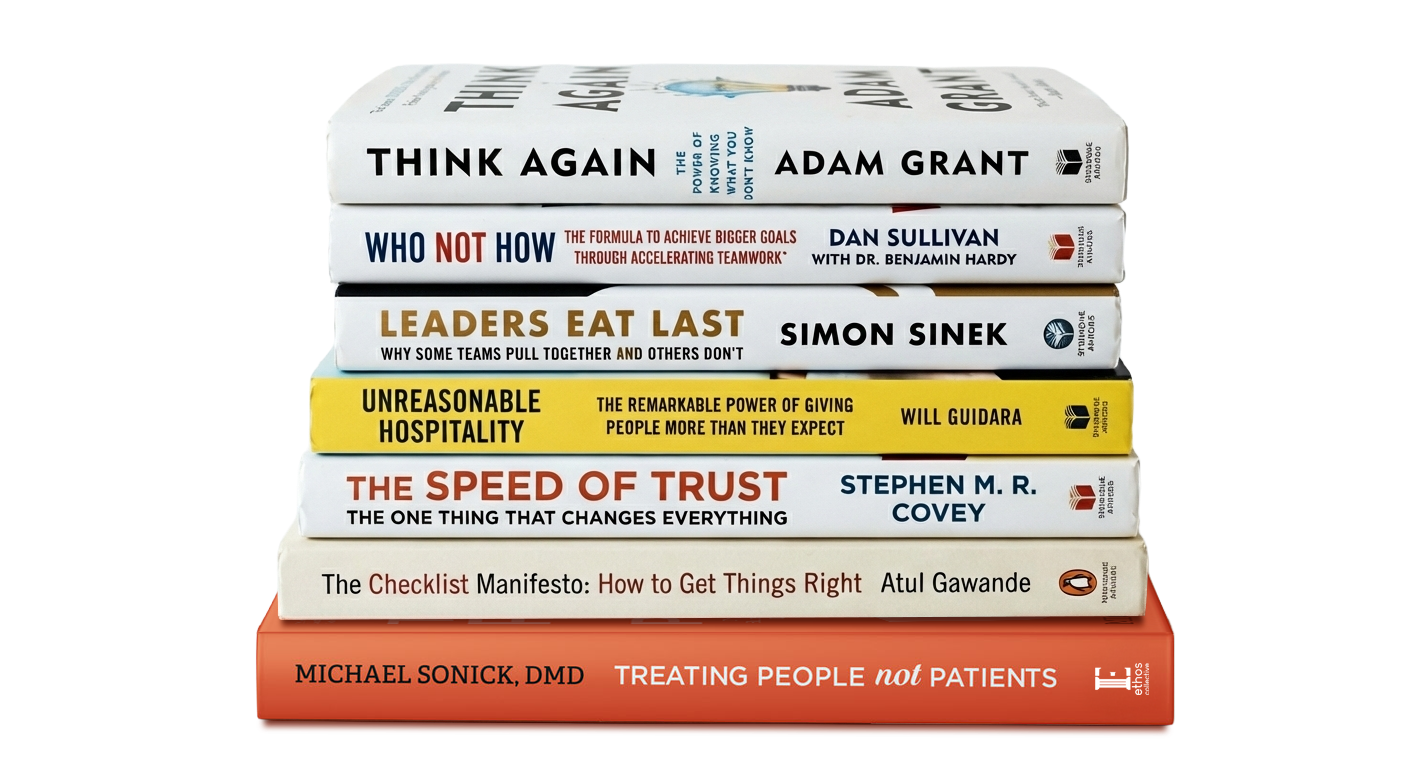
Recommended Books
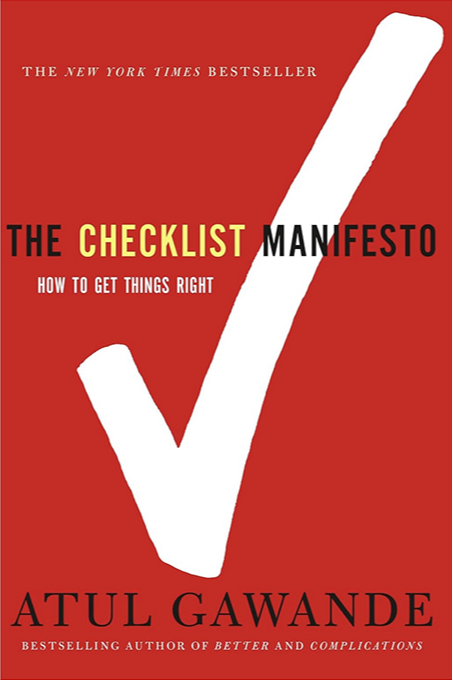
The Checklist Manifesto - Atul Gawande
This book explores how high-performing industries - aviation, medicine, construction - use simple checklists to drive consistency and reduce errors. Gawande demonstrates how complexity in modern work requires structured systems, not just talent. For leaders, it reinforces that excellence is built on disciplined execution, not memory or heroic effort.
“Systems and reliability that create trust in clinical care”
- Process improvement
- Operational efficiency
- Risk management
- Accountability
- Execution consistency
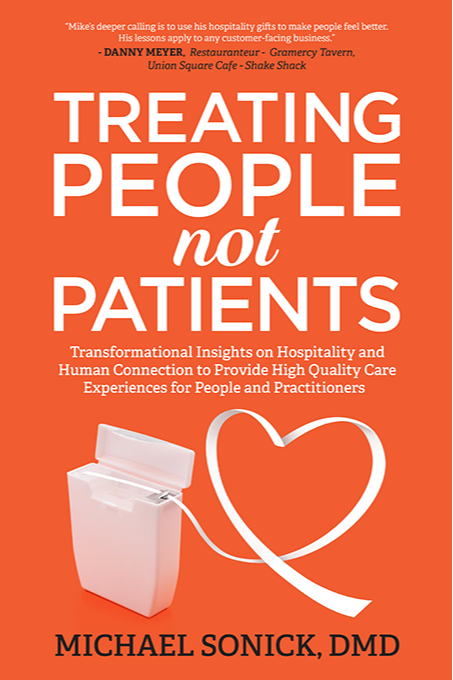
Treating People, Not Patients — Dr. Michael Sonick
Grant challenges leaders to rethink what they “know.” He emphasizes intellectual humility, curiosity, and the ability to revise opinions as strengths—not weaknesses. In rapidly changing environments, leaders who can unlearn and relearn have a competitive edge.
“Empathy and service as the foundation of excellence”
Leadership Development Areas:
- Emotional intelligence
- Client experience
- Relationship building
- Empathy in leadership
- Communication excellence
- Culture of care
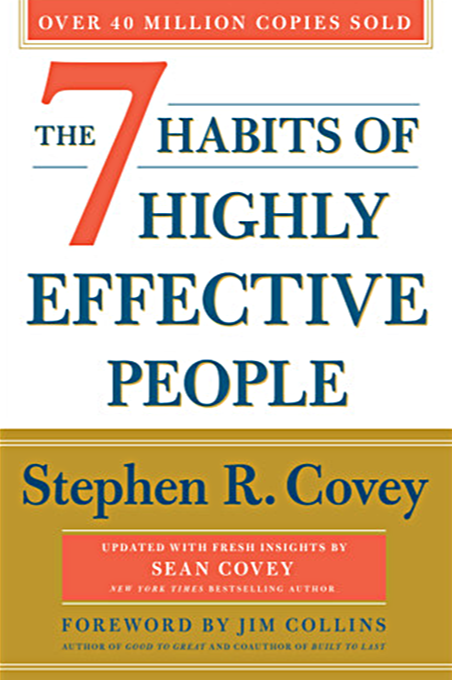
The 7 Habits of Highly Effective People - Stephen R. Covey
With more than 10 million copies sold, The 7 Habits of Highly Effective People continues to be one of the most prominent personal growth wholesale books out there, with everyone from big businesses to universities ordering it in bulk to teach their teams how to work and live more effectively and efficiently, playing to their strengths and understanding how their habits shape their reality.
Covey’s famous framework is simple, outlining seven specific steps to self-mastery and offering priceless advice on taking control of your life, strengthening your team, becoming and staying proactive, and more tips that nudge you further down the path to victory!
As chairman of the Covey Leadership Center and the nonprofit Institute for Principle-Centered Leadership, Stephen R. Covey is a powerhouse of the personal growth field, a guru of sorts whose easy to understand explanations of effective habits have lead thousands to find true happiness and success using his model.
Buy It Now!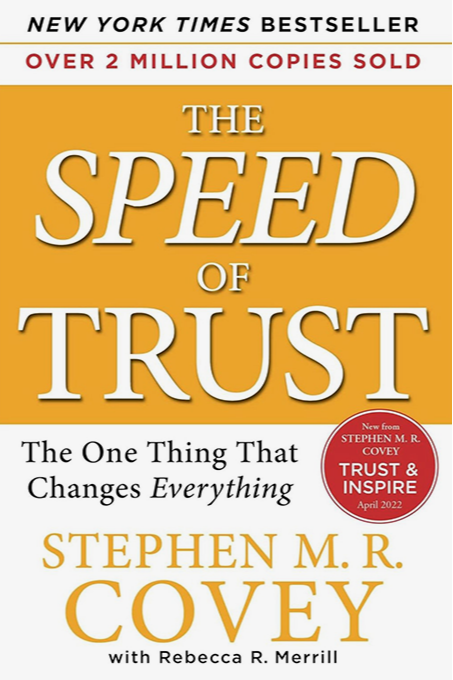
The Speed of Trust — Stephen M.R. Covey
Covey argues that trust is not a “soft skill” - it’s an economic driver. High-trust teams move faster, make decisions quicker, and experience less friction. The book outlines behaviors that build or erode trust and explains how leaders can intentionally create cultures rooted in credibility and transparency.
Leadership Development Areas:
- Organizational culture
- Team engagement
Communication - Influence
Credibility
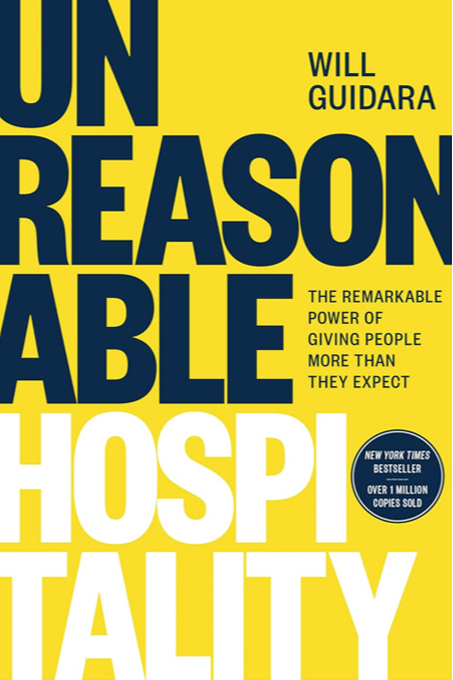
Unreasonable Hospitality — Will Guidara
Guidara shares lessons from transforming a restaurant into one of the best in the world. The core idea: going beyond reasonable expectations creates unforgettable experiences. Leaders can apply this by empowering teams to create exceptional internal and external service moments.
“Going above and beyond to create unforgettable experiences”
Leadership Development Areas:
- Customer experience
- Culture of excellence
- Employee empowerment
- Brand differentiation
- Service leadership
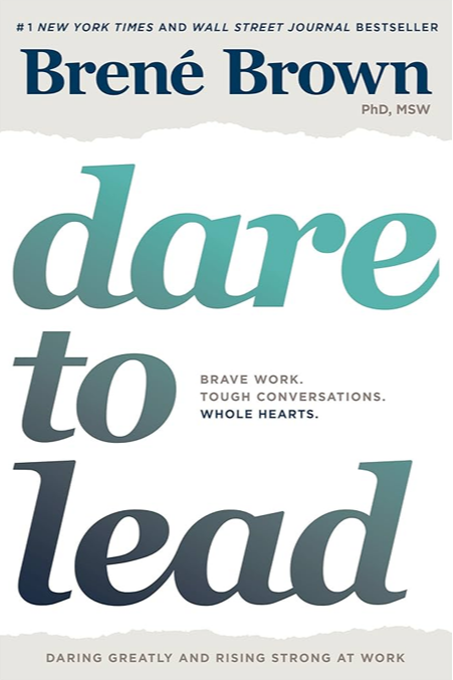
Dare to Lead - Brené Brown
Brené Brown defines a leader as anyone who takes responsibility for recognizing the potential in people and ideas and has the courage to develop that potential. Based on two decades of research, Brown argues that leadership is not about titles or status, but about a collection of four teachable, measurable skill sets:
Rumbling with Vulnerability: Embracing the "rumble"—tough, honest conversations—by staying curious and emotionally present.
Living into Our Values: Identifying core beliefs and "walking the talk" by aligning behaviors with these values.
Braving Trust: Using the BRAVING framework to build trust through Boundaries, Reliability, Accountability, Vault (confidentiality), Integrity, Non-judgment, and Generosity.
Learning to Rise: Developing resilience to bounce back from failure by recognizing emotional "hooks" and rewriting the narrative of setbacks.
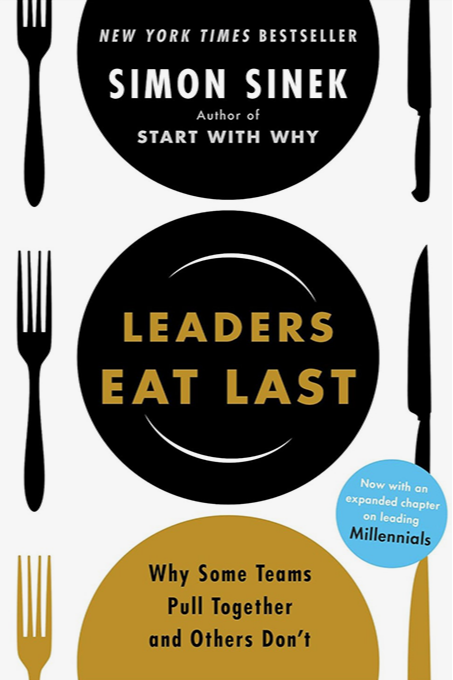
Leaders Eat Last — Simon Sinek
Sinek explores how great leaders create environments where people feel safe, valued, and protected. Drawing from military and corporate examples, he explains that when leaders prioritize their teams’ well-being, loyalty and performance naturally follow.
“Building trust and safety within teams”
Leadership Development Areas:
- Psychological safety
- Employee retention
- Culture building
- Servant leadership
- Long-term performance
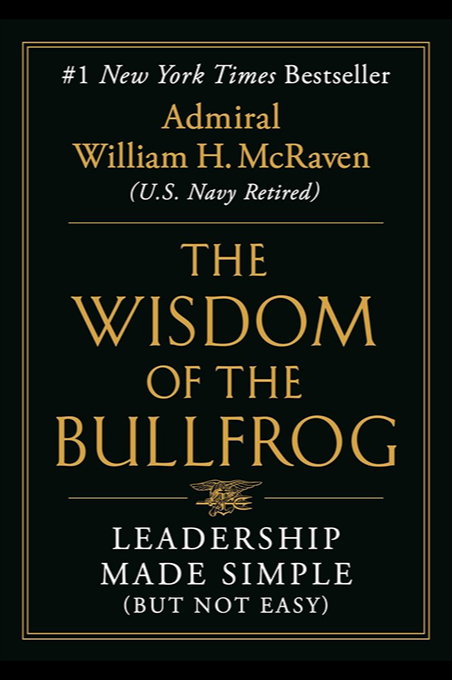
The Wisdom of the Bullfrog (Leadership Made Simple (But Not Easy)) - Admiral William H. McRaven
Admiral William H. McRaven distills over 40 years of Navy SEAL leadership into 18 essential principles. The title refers to the "Bullfrog," the honor given to the longest-continuously serving active-duty SEAL—a title McRaven held upon his retirement.
Core Principles and Takeaways
McRaven defines leadership simply: accomplishing a task with the people and resources available while maintaining the integrity of the institution.
Death Before Dishonor: Integrity and honor are the non-negotiable foundations of great leadership. He advises asking three questions for any decision: Is it ethical (follows rules), legal (follows law), and moral (is it right?).
Trust is a Reservoir: You cannot "surge" trust in a crisis; it must be built over time through consistent action before it is actually needed.
When in Command, Command: Leaders must be decisive and project confidence even during uncertainty, taking full responsibility for their team's outcomes.
Sua Sponte (Of One's Own Accord): Foster a "culture of action" where team members take initiative to solve problems without waiting for orders.
A Shepherd Should Smell Like His Sheep: Leaders must stay connected to the "front lines," sharing the same hardships and daily realities as their team to earn respect and trust.
Hope is Not a Strategy: Success requires a detailed vision, strategy, and plan—always including contingency "Plan B" and "Plan C" for when things inevitably go wrong.
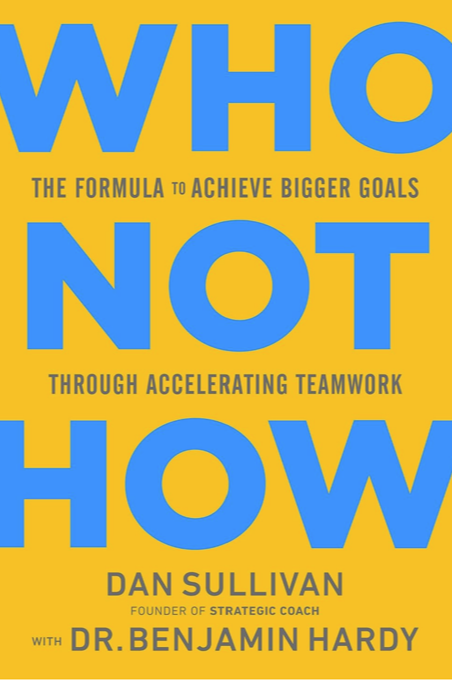
Who Not How – Dan Sullivan
This book reframes problem-solving: instead of asking “How do I do this?” ask “Who can help achieve this?” It encourages leaders to focus on strengths and build networks that multiply results rather than personally carrying every initiative.
“The formula to achieve bigger goals through accelerating teamwork”
Leadership Development Areas:
- Delegation
- Talent optimization
- Scaling operations
- Time management
- Strategic partnerships
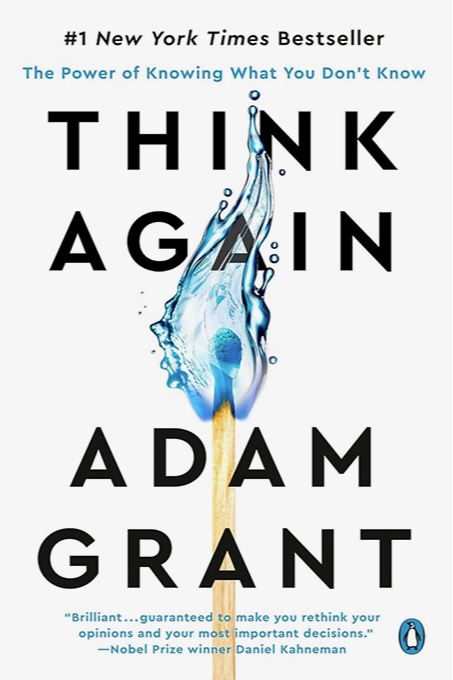
Think Again– Adam Grant
Grant challenges leaders to rethink what they “know.” He emphasizes intellectual humility, curiosity, and the ability to revise opinions as strengths—not weaknesses. In rapidly changing environments, leaders who can unlearn and relearn have a competitive edge.
“The power of knowing what you don’t know”
Leadership Development Areas:
- Critical thinking
- Adaptability
- Innovation
- Feedback culture
- Learning agility